What to Cook With What You Already Have
A full fridge and nothing to eat? A simple formula, eight template meals and a substitution cheat sheet for cooking with what you already have.
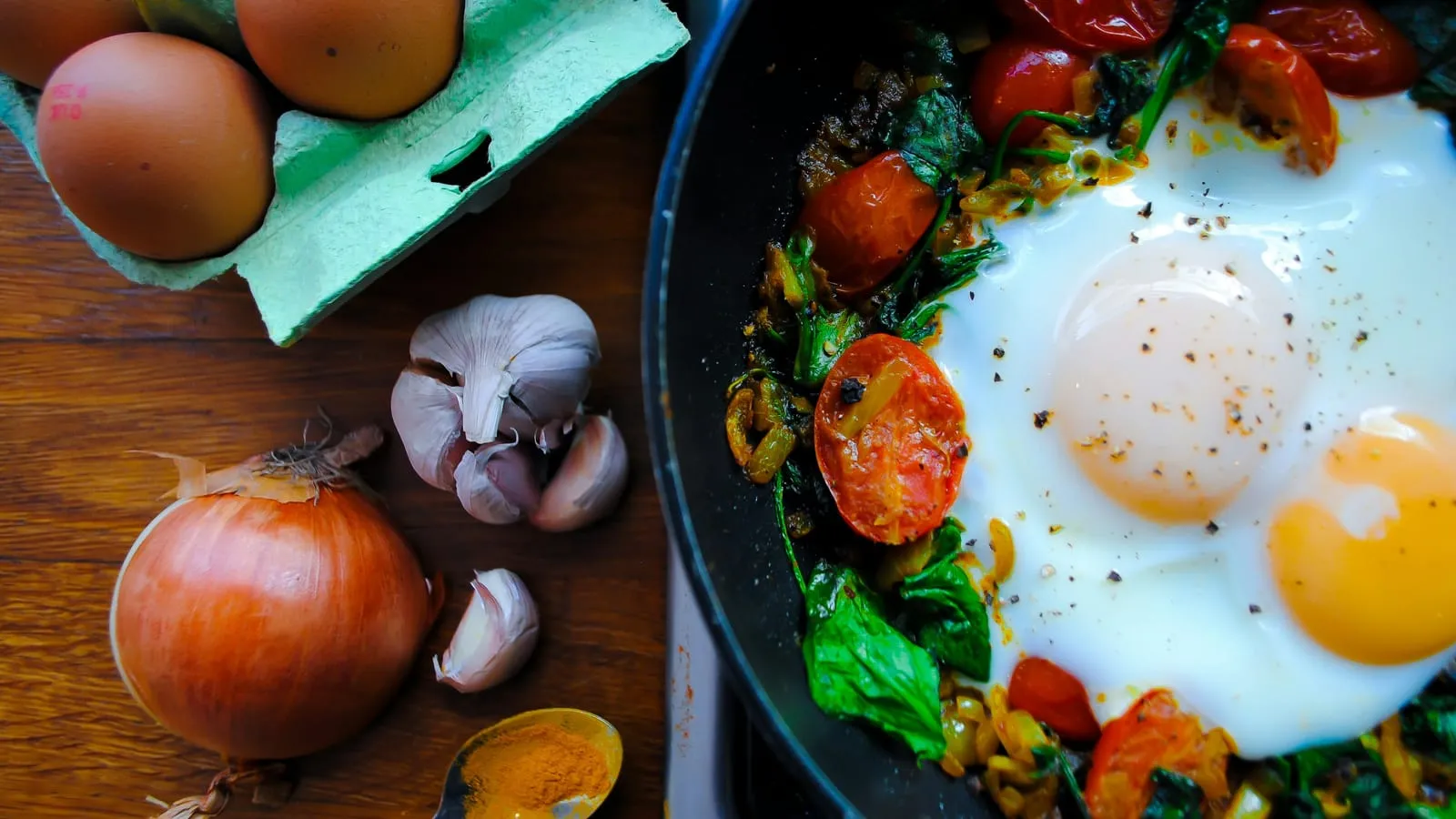
It’s 6:30pm. The fridge holds half a red pepper, three eggs, some wilting spinach, the end of a block of cheddar, a container of yesterday’s rice and a lemon. The cupboard has pasta, a tin of chickpeas and some spices.
That’s food. It’s quite a lot of food. And yet the overwhelming feeling is that there’s nothing to eat, so you start thinking about a delivery app, or about another trip to the shop for “proper” ingredients.
The problem isn’t a lack of ingredients. It’s that ingredients aren’t meals, and turning one into the other on a tired weekday evening takes a kind of thinking most recipes don’t teach. Recipes start with a dish and tell you what to buy. Cooking from what you have works the other way round: you start with the food and work out the dish.
This guide gives you a way to do that reliably. There’s a simple formula, eight template meals that take almost anything, five flavour kits from the cupboard, and a substitution cheat sheet for the gaps.
Why recipe-first cooking creates waste
Following recipes is a good way to learn to cook. As a way to run a kitchen, it has a cost.
A recipe asks for 200g of spinach, two tablespoons of crème fraîche, a quarter of a bunch of coriander and half a red pepper. You buy the bag, the tub, the bunch and the pepper. You use the amounts the recipe needs. Everything else is now an “orphan” ingredient: bought for one dish and left with no plan.
Orphans are the heart of household food waste. WRAP’s diary research in the UK found that about a quarter of food thrown away at home is because too much was cooked or served, and a similar share is food that went off before anyone ate it. Leftover recipe ingredients make up a big part of the second group.
The fix isn’t to stop using recipes. It’s to put them second. Start with what’s already in your kitchen, especially what’s about to turn, and only then look for a dish.
Step 1: start with what’s about to turn
Before deciding what to cook, open the fridge and pull out anything that needs using in the next two days. Put it on the counter.
This is the most important step, because it changes the question. “What do I feel like?” has a thousand answers and leads to the shop. “What can I make from these?” has only a few answers, and they all use food you’ve already paid for.
In the example above, the urgent items are the spinach (wilting), the rice (cooked yesterday, so it needs using today), and the half pepper. The eggs, cheese and lemon are useful extras, not deadlines.
Step 2: use the formula
Almost every everyday meal is built from four parts:
Base + protein + vegetables + flavour
| Part | Examples you probably have |
|---|---|
| Base | Rice, pasta, noodles, bread, tortillas, potatoes, couscous, oats, eggs (in a frittata, eggs are the base) |
| Protein | Eggs, tinned beans or chickpeas, lentils, tinned fish, leftover meat, tofu, cheese, yoghurt |
| Vegetables | Anything in the fridge drawer, frozen peas, spinach and sweetcorn, tinned tomatoes |
| Flavour | A flavour kit (see below), plus an acid like lemon or vinegar to finish |
You don’t need all four every time. A frittata needs no separate base, and a bean chilli is its own protein and vegetable. But checking the four parts is a fast way to spot what’s missing, and the gap is usually something the cupboard can fill.
Now match your urgent items to a template.
Step 3: pick a template meal
These eight dishes are forgiving. They’ll take almost any combination of what you have, they don’t need exact quantities, and none of them takes more than about 30 minutes.
1. Frittata
Takes: any cooked or quick-cooking vegetable, leftover meat, cheese, herbs, cooked potatoes or pasta.
How: whisk 6 eggs with a pinch of salt. Soften about 2 cups of chopped vegetables and other fillings in an ovenproof pan, pour the eggs over and cook on a low heat until the edges set. Scatter over cheese and finish under the grill (broiler), or in the oven at 180°C / 350°F, for 10 to 15 minutes until just set in the middle.
Best for: the end of the vegetable drawer, and small amounts of several things.
2. Fried rice (or fried grains)
Takes: cooked rice, any vegetables, frozen peas, eggs, leftover meat, tofu.
How: fry vegetables and any meat in a hot pan with oil, push them to one side, scramble an egg in the space, then add cold cooked rice and stir-fry until hot all the way through. Season with soy sauce, and finish with sesame oil or spring onion if you have them.
A note on rice safety: cooked rice needs to be cooled quickly and refrigerated within about an hour of cooking, then eaten within a day. Reheat it until it’s steaming hot throughout, and only reheat it once. Day-old rice makes better fried rice, but it should be yesterday’s rice, not last week’s.
3. Blended soup
Takes: almost any vegetable, including the soft and wrinkly ones. Potatoes, carrots, squash, broccoli stems, spinach, peppers, tomatoes and leeks all work.
How: soften an onion (or leek, or celery) in oil, add chopped vegetables, cover with stock (or water with a stock cube) and simmer until everything is soft, usually 20 minutes. Blend, then season. A spoonful of yoghurt, a squeeze of lemon or a handful of cheese at the end makes a big difference.
Best for: vegetables that are past their best for anything else. Soup also freezes well in portions.
4. Pasta with whatever’s there
Takes: nearly anything.
How: cook the pasta. While it cooks, fry garlic in oil, then add vegetables, beans, tinned fish or leftover meat. Stir in some of the starchy pasta water and the drained pasta, and toss until glossy. Finish with cheese, lemon zest or chilli.
Variations: a tin of tomatoes makes a sauce; crème fraîche or cream cheese makes it creamy; frozen peas and the end of a block of cheese make a quick “carbonara-ish” version with an egg.
5. Traybake
Takes: root vegetables, peppers, onions, squash, broccoli, sausages, chicken thighs, chickpeas, halloumi.
How: cut everything into pieces of a similar size, toss with oil, salt and a spice mix, spread out in a single layer and roast at 200°C / 400°F for 30 to 40 minutes, turning once. Add quick-cooking things like cherry tomatoes or spinach for the last 10 minutes.
Best for: larger amounts of vegetables, and evenings when you’d rather the oven did the work.
6. Stir-fry or noodles
Takes: any crunchy vegetable, cabbage, frozen vegetables, eggs, tofu, leftover meat.
How: stir-fry vegetables on a high heat, add protein, then noodles or rice and a sauce. A basic sauce is soy sauce, a little sugar or honey, garlic and ginger (fresh, frozen or from a jar), and a splash of vinegar.
7. Grain bowl
Takes: a cooked grain, any raw or roasted vegetables, beans, eggs, cheese, nuts, seeds, pickles.
How: grain in the bottom, then piles of whatever you have, then a dressing. For a quick one, mix 3 parts oil to 1 part lemon juice or vinegar, with a little mustard and salt. Or thin yoghurt with lemon juice and water.
Best for: small amounts of lots of different things, and lunches.
8. Quesadilla, toastie or wrap
Takes: cheese plus almost anything: beans, leftover meat, spinach, peppers, sweetcorn, onions.
How: fill a tortilla or two slices of bread, and cook in a dry pan until golden on both sides and melted inside.
Best for: a quick meal for one or two, and the last bits of several things.
Back to the example
Half a pepper, three eggs, wilting spinach, the end of the cheddar and yesterday’s rice. There are two good options:
- Fried rice: the pepper and spinach go in the pan, the eggs get scrambled into it, and the rice gets used on the right day. Soy sauce and a squeeze of lemon finish it. About 15 minutes.
- Frittata: pepper and spinach with the eggs and cheddar, and the rice heated on the side or added straight into the frittata.
Either one uses every urgent item, and you didn’t need the shop.
Pantry tracking and expiry reminders are free. Recipe suggestions are part of Korgo Pro, which you can try free on the yearly plan. Download Korgo for iPhone →
Step 4: add a flavour kit
The same base, protein and vegetables become a different dinner depending on how you season them. These five combinations need only shelf-stable ingredients, so you can keep them in stock and turn any template into something that tastes intentional.
| Flavour kit | Cupboard ingredients | Works with |
|---|---|---|
| Mediterranean | Garlic, tinned tomatoes, dried oregano, olive oil, lemon, chilli flakes | Pasta, traybake, frittata, soup |
| East Asian | Soy sauce, garlic, ginger, sesame oil, rice vinegar, honey or sugar | Fried rice, stir-fry, noodles, grain bowl |
| Mexican-style | Cumin, smoked paprika, chilli powder, garlic, lime, tinned beans | Quesadilla, traybake, rice, bowls |
| Indian-style | Curry powder or garam masala, cumin, turmeric, garlic, ginger, tinned tomatoes, coconut milk | Chickpeas, lentils, any vegetables, rice |
| Middle Eastern | Cumin, coriander, paprika, garlic, lemon, yoghurt, tahini | Traybake, grain bowl, chickpeas, eggs |
The finishing step matters more than people expect. A squeeze of lemon, a splash of vinegar, a spoonful of yoghurt or a handful of fresh herbs at the end can make leftovers taste freshly cooked.
Step 5: fill the gaps with substitutions
When the one thing a dish needs isn’t there, you don’t need to go to the shop. You need a substitute.
| Missing | Use instead |
|---|---|
| Fresh tomatoes | Tinned tomatoes, or tomato paste thinned with a little water |
| Stock | Water plus a stock cube, a spoonful of miso or a splash of soy sauce |
| Cream | Milk plus a knob of butter, crème fraîche, or yoghurt stirred in off the heat so it doesn’t split |
| Buttermilk | Milk with a tablespoon of lemon juice or vinegar per cup, left for 5 minutes |
| Fresh herbs | Dried herbs, about a third of the amount, added earlier in cooking |
| Onion | Leek, shallot, spring onion or a pinch of onion powder |
| Breadcrumbs | Crushed crackers, oats, or stale bread blitzed |
| Lemon | Lime, or a splash of vinegar |
| Rice | Any grain: couscous, quinoa, bulgur, orzo |
| Parmesan | Any hard, salty cheese |
Most recipe ingredients are less essential than they look. If the substitute keeps the dish’s basic job (acid, fat, salt, starch or crunch), the dish will still work.
When you do want a recipe
Templates cover most weeknights. Sometimes, though, you’ve got a specific combination, like chickpeas, a sweet potato and half a tin of coconut milk, and you want an actual recipe for it.
This is where ingredient-based recipe search helps. You tell it what you have, and it finds dishes that use those ingredients. The catch with most of these tools is that you have to type in your ingredients every time, from memory, and they don’t know which of those ingredients is about to turn. By the time you’ve listed the contents of your fridge in a search box, the delivery app has already won.
What makes this genuinely easy is having your ingredients already recorded, so the matching happens without any typing.
A 10-minute “what’s for dinner” routine
Put the steps together and dinner becomes a short routine instead of a daily dilemma:
- Check what’s urgent (2 minutes). Pull out anything that needs using in the next two days.
- Pick a template (1 minute). Look at the urgent items and choose the template that uses most of them.
- Pick a flavour kit (1 minute). Whatever you feel like.
- Fill gaps (1 minute). Use the cupboard, the freezer or the substitution table.
- Cook.
After a few weeks, steps 1 to 4 happen almost automatically. You’ll open the fridge, see spinach and eggs, and think “frittata” before you’ve made any conscious decision.
Doing it with Korgo
Korgo does the two parts of this routine that are hardest on a tired evening: knowing what you have, and knowing what needs using first.
- Your pantry is already your ingredient list. You scan food in as you unpack, so Korgo knows what’s in your kitchen without you typing anything into a search box.
- What’s urgent is easy to see. Items close to their expiry date stand out in the pantry, and gentle reminders arrive before they turn. That’s Step 1 done for you.
- Recipes from what you already have. Korgo Pro matches a library of more than 200 recipes to what’s in your pantry, so “what can I make?” becomes a list of real options. Pick the one that uses your urgent items.
- Nutrition comes with it. Calories, protein, fat and carbs are filled in for everything you scan, which is useful if you’re keeping an eye on what you eat.
The short version
A fridge full of ingredients feels like “nothing to eat” because ingredients aren’t meals. Turn one into the other by starting with the food, not the recipe.
Pull out what’s about to turn. Build a meal from base + protein + vegetables + flavour. Choose one of eight template meals (frittata, fried rice, soup, pasta, traybake, stir-fry, grain bowl or quesadilla). Season it with a cupboard flavour kit. Fill gaps with substitutes.
You’ll cook more from what you’ve already bought, make fewer last-minute trips to the shop, and throw away far less.
Sources: WRAP household food waste diary research · Food Standards Agency and NHS guidance on cooked rice