The 7 Foods You Waste Most (and What to Do With Each)
Bread, potatoes, milk, bananas, salad, herbs and half-used tins are the most wasted foods at home. How to store, rescue and use up each one.
Household food waste looks like a general problem, but it isn’t spread evenly. It’s concentrated. In nearly every kitchen, a short list of the same foods goes in the bin week after week, while most of the shopping gets eaten without any trouble.
The national data shows the same pattern. In the UK, WRAP’s figures put bread, potatoes, milk, bananas and salad at the top of the list by weight. Love Food Hate Waste estimates that UK households throw away around 20 million slices of bread every day. WRAP has estimated that 1.4 million edible bananas are binned daily. US data is less detailed by item, but the categories that dominate (fresh produce, dairy, bakery) are the same.
That concentration is useful. You don’t need to overhaul how your household eats. Fix your handling of these seven foods and you’ll cut out a large share of your waste.
For each one, here’s why it gets wasted, how to store it, what to do when it starts to turn, and how to stop it happening again.
1. Bread
Why it gets wasted: a loaf goes stale or mouldy faster than a small household can eat it, and the best-before date makes people bin it early. WRAP found that one loaf in three is thrown away because of its best-before date. On bread, that date is about quality, not safety.
How to store it:
- Not in the fridge. This surprises people, but the fridge makes bread go stale faster. At fridge temperature, the starch in bread recrystallises more quickly. Keep it at room temperature in a bread bin or its bag.
- Freeze half on the day you buy it. Slice it first if it’s a whole loaf. Frozen slices go straight into the toaster, and the bread lasts for months instead of days. This one habit gets rid of most bread waste.
What to do when it turns:
- Stale (but not mouldy): breadcrumbs (blitz and freeze), croutons (cubes, oil, 200°C / 400°F for about 10 minutes), French toast, bread-and-butter pudding, panzanella, or a thickener for soup.
- Mouldy: bin the whole loaf. In soft bread, mould spreads through the crumb well beyond the spots you can see. Don’t cut it off and eat the rest.
Stop it recurring: buy a smaller loaf, or keep the whole loaf in the freezer and take slices as you need them.
2. Potatoes
Why they get wasted: they’re cheap and usually sold in big bags, they sit somewhere dark and forgotten, and they sprout or go soft before the bag is finished. Potatoes are one of the most-wasted foods in UK homes by weight.
How to store them:
- Somewhere cool and dark, out of their plastic bag. Light turns them green; plastic traps moisture and makes them rot. A paper bag or a ventilated basket works well.
- In the UK, the fridge is now an option. The Food Standards Agency used to advise against refrigerating raw potatoes because of a concern about acrylamide forming when they’re cooked. In 2022 it updated that advice: a reviewed study found home fridge storage doesn’t materially increase acrylamide-forming potential compared with a cool, dark cupboard. You can now store them either way, and they last longest in the fridge. Some US guidance still recommends keeping potatoes out of the fridge, so it’s a choice rather than a rule.
- Away from onions. The two speed up each other’s spoilage.
What to do when they turn:
- Sprouting but firm: fine. Cut out the sprouts and any eyes and cook as normal.
- Slightly soft or wrinkled: fine for mash, soup or roasting.
- Green patches: cut them away generously. If a potato is green all over, or tastes bitter, bin it. The green indicates solanine, which can make you ill in quantity.
- Mushy, leaking or mouldy: bin it.
Rescue recipes: mash and freeze in portions, or par-boil and freeze for roast potatoes later. Raw potatoes don’t freeze well, so cook or blanch them first. A big batch of potato and leek soup also freezes well.
Stop it recurring: buy loose potatoes in the amount you’ll use within two weeks. The big bag is cheaper per kilo only if you eat it all.
3. Milk
Why it gets wasted: households buy the big bottle because it’s better value, use it more slowly than expected, and pour out the last third when the date arrives.
How to store it:
- On a shelf, not in the door. The door is the warmest part of the fridge and changes temperature every time it’s opened. Milk kept on a shelf at the back lasts noticeably longer.
- Keep the fridge at or below 5°C / 40°F. Plenty of home fridges run warmer, and milk is one of the first things to suffer.
What to do near the date:
- Check the label. Several UK supermarkets have switched milk from “use by” to “best before” to encourage the sniff test. If yours says best before, smell it. Milk that smells and looks normal is generally fine for a few days past the date. In the US, the date on milk is a quality date in most states.
- Freeze it. Pour off a little to leave room for expansion, then freeze. It separates when it thaws. Shake it hard and it’s fine for cooking, baking, porridge and tea or coffee, though less pleasant to drink straight.
- Use a lot at once: a white sauce, a rice pudding, a batch of pancake batter or overnight oats.
If the milk is lumpy, thick, yellowing or smells properly sour, bin it.
Stop it recurring: buy the size you’ll finish in five or six days. Two smaller bottles, with one in the freezer, beat one large bottle that goes off.
4. Bananas
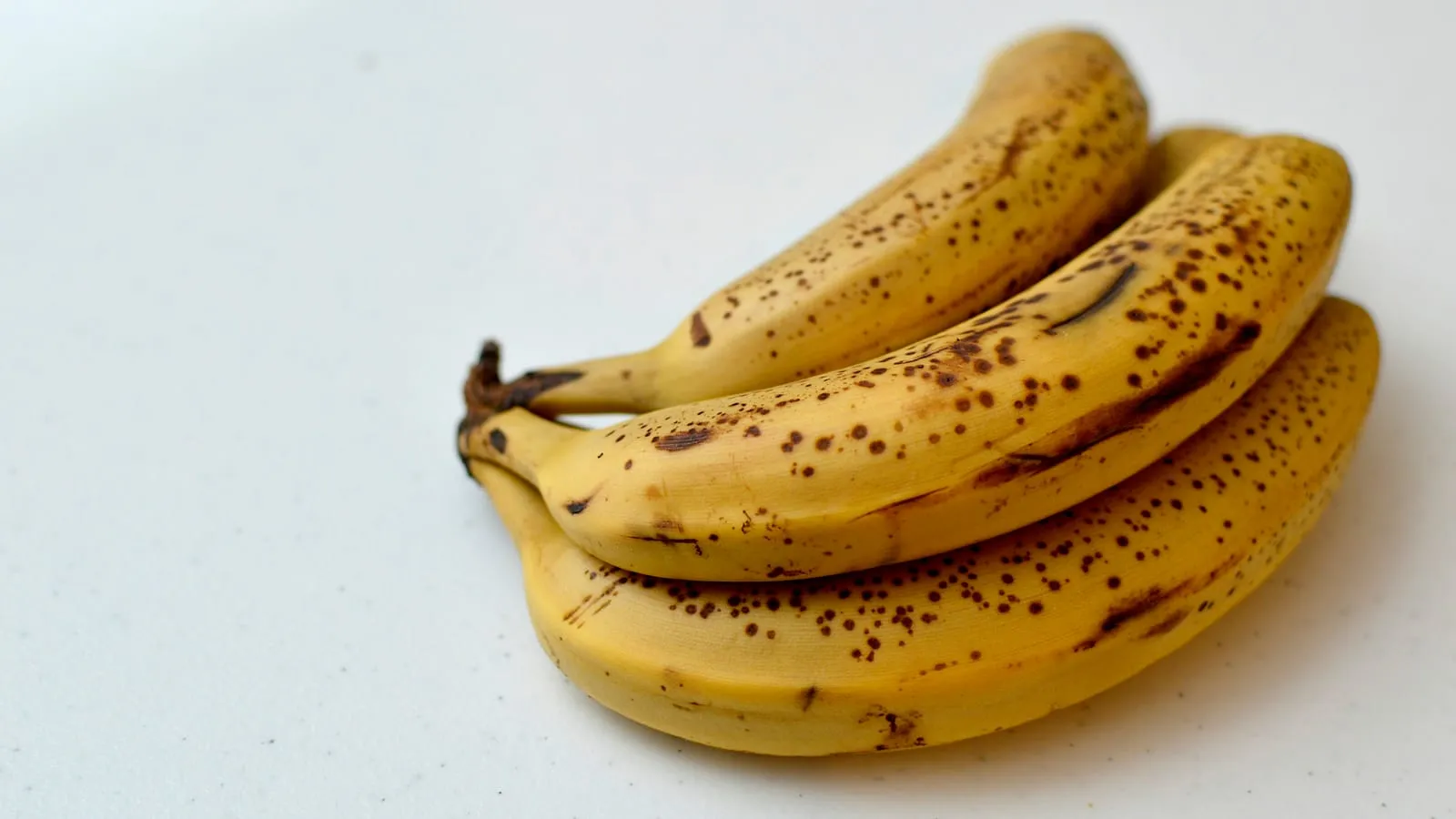
Why they get wasted: bananas ripen fast, and the brown spots put people off well before the fruit is actually past it. A bunch bought on Saturday is often “too brown” by Wednesday.
How to store them:
- Keep them apart from other fruit. Bananas give off ethylene, a gas that speeds up ripening, both in the bananas and in anything next to them.
- Refrigerate them once they’re ripe. The skin turns black, but the fruit inside stays firm and sweet for several extra days. Don’t refrigerate green bananas, which won’t ripen properly in the cold.
- Buy a mix of ripeness: a couple of yellow ones for now and a couple of greener ones for later in the week.
What to do when they turn:
- Freeze them, peeled. Break them into chunks and freeze in a bag. Frozen banana goes straight into smoothies, porridge or a blender “ice cream.”
- Bake with them. Banana bread, muffins and pancakes are all better with very ripe, almost black bananas.
- Two-ingredient pancakes: one mashed ripe banana and two eggs, cooked in small rounds.
Stop it recurring: freeze as soon as a banana goes from “spotty” to “brown.” Don’t wait for it to become a problem on the counter.
Korgo is free to start. Pantry tracking, barcode scanning and expiry reminders are in the free version, which is what tells you when something is about to turn. Download Korgo for iPhone →
5. Salad and leafy greens
Why they get wasted: bagged salad has the shortest life of anything in the fridge, it’s often bought with good intentions rather than for a specific meal, and it goes from fine to slimy in about a day.
How to store it:
- Get rid of moisture. Excess water is what makes leaves go slimy. Put the leaves in a container lined with dry kitchen paper, add another sheet on top, and close the lid. Once a bag has been opened, this adds days.
- Whole heads last much longer than bags. A whole lettuce, cabbage or bunch of kale keeps for a week or more. Pre-cut leaves have been damaged and start to spoil straight away.
- Store leaves in the salad drawer, away from fruit that gives off ethylene, like apples and bananas.
What to do when they turn:
- Limp but not slimy: revive leaves in a bowl of iced water for 15 to 30 minutes. They crisp up surprisingly well.
- Spinach, chard, kale past their best for salad: cook them. Wilt into pasta, curry, soup or eggs. Or freeze them raw in a bag and add straight to cooked dishes and smoothies.
- Slimy or smelling bad: pick out the bad leaves and use the rest quickly, or bin it if most of it has gone.
Stop it recurring: buy bagged salad only for a specific meal in the next two days. For everything else, buy whole heads, sturdier greens or frozen spinach.
6. Fresh herbs
Why they get wasted: you buy a bunch of coriander for one tablespoon in one recipe, and the other 90% goes limp in the fridge.
How to store them:
- Soft herbs (coriander, parsley, dill, mint): treat them like flowers. Trim the stems, stand them in a glass of water, cover loosely with a bag and keep them in the fridge. They last a week or more like this, instead of a couple of days.
- Basil: the exception. Keep it at room temperature in a glass of water, out of direct sun. It turns black in the fridge.
- Hard herbs (rosemary, thyme, sage): wrap in slightly damp kitchen paper and keep in a container in the fridge.
What to do when they turn:
- Freeze them in oil. Chop, pack into an ice cube tray, cover with olive oil and freeze. Drop a cube straight into a hot pan.
- Blend them into a sauce: pesto (not just basil — parsley, coriander or rocket all work), chimichurri, salsa verde or a green dressing. All of these keep in the fridge for several days or freeze well.
- Dry the hard herbs: leave rosemary and thyme on a plate for a few days and they’ll keep for months.
Stop it recurring: buy potted herbs for the ones you use most, frozen herbs for cooking, and fresh bunches only when you have two or three uses in mind.
7. Half-used tins and jars
Why they get wasted: a recipe needs half a tin of tomatoes, a third of a tin of coconut milk or one tablespoon of tomato paste. The rest goes in the fridge, gets pushed to the back, and grows mould a fortnight later.
How to store them:
- Never keep food in the open tin. Decant it into a container with a lid straight away. The UK Food Standards Agency advises against storing opened tins in the fridge, especially acidic foods like tomatoes and fruit, because metal from the can can transfer to the food.
- Label the container with what it is and when you opened it. Half a tin of something red in a container looks the same as several other things.
- Use it within two or three days, or freeze it.
What to freeze, and how:
- Tomato paste: spoon tablespoon-sized dollops onto baking paper, freeze, then bag. Use from frozen.
- Tinned tomatoes, coconut milk, stock: freeze flat in a bag and snap off what you need.
- Chipotle paste, curry paste, pesto: freeze in an ice cube tray.
- Beans and chickpeas: freeze in a bag, drained. They hold up well.
Stop it recurring: look for smaller tins, or squeezable tubes of tomato paste, which last for weeks in the fridge. Better still, when you open a tin, plan the second half on the spot: “half for tonight’s curry, half for Thursday’s soup.”
The pattern behind all seven
Look at the seven together and the same thing keeps coming up. None of these foods is wasted because people don’t know how to cook it. They’re wasted because each has a window, a few days in which it needs to be eaten, frozen or turned into something else, and the window passes without anyone noticing.
The bread could have been frozen on day one. The bananas could have been frozen on day four. The herbs could have been blended on day three. The half-tin could have gone into Thursday’s soup. In every case, the useful decision had a deadline, and nothing prompted it.
That’s why “learn more recipes” rarely fixes household waste. What fixes it is noticing in time.
Find your own top seven
These seven are the national pattern. Yours will overlap, but it won’t match exactly. A household of two that rarely eats bread might lose far more to cheese, yoghurt and cooked rice.
The fastest way to find out is a one-week bin diary: write down every food that gets thrown away, and look at what appears more than once. The full method is in How much food is your household actually wasting?. Most people find two or three repeat offenders, and those are the ones to fix first.
Doing it with Korgo
The Korgo food expiry tracker is built for the “noticing in time” part.
- Add food as you unpack. Scan the barcode for packaged items, or search by name for loose produce like bananas and potatoes. Set the expiry date or a sensible “eat by” date.
- Let it tell you when a window is closing. Items that are about to expire stand out in the pantry, and Korgo sends a gentle reminder before they turn. That reminder is your prompt to freeze the bread, bake the bananas or blend the herbs.
- Keep frozen food on the list too. When you freeze the second half of a tin or half a loaf, add it to Korgo with a new date, so it doesn’t just disappear in the freezer instead.
- Find your repeat offenders. With Pro, Korgo’s waste insights show what keeps ending up in the bin, which is your personal top seven without a paper diary.
- Cook from what’s about to turn. Pro also suggests recipes from what you already have, which helps when the question is “what do I do with half a tin of coconut milk and some spinach?”
The short version
| Food | Store it | When it turns |
|---|---|---|
| Bread | Room temperature; freeze half on day one | Stale: croutons, crumbs, French toast. Mouldy: bin it |
| Potatoes | Cool, dark, out of plastic; fridge OK (UK FSA, 2022) | Sprouts: cut out. Green: cut away or bin |
| Milk | Shelf, not door; fridge ≤5°C / 40°F | Freeze it, or use in sauce, porridge, batter |
| Bananas | Apart from other fruit; fridge once ripe | Peel and freeze; bake |
| Salad leaves | Container lined with kitchen paper | Revive in iced water; cook or freeze greens |
| Fresh herbs | Soft herbs in water in the fridge; basil on the counter | Freeze in oil; blend into a sauce |
| Half-used tins | Decant straight away; label it | Freeze flat or in an ice cube tray |
Each of these foods has a short window. Most household food waste happens because nobody notices it closing. Store them well, decide early, and use reminders so that you don’t have to rely on remembering.
Sources: WRAP UK household food waste data · Love Food Hate Waste (2022) · Food Standards Agency, acrylamide and potato storage guidance (2022) · Food Standards Agency, storing food safely · USDA FSIS food product dating