Why You Keep Buying Duplicate Groceries (And the 5-Minute Fix)
You bought cumin again. Duplicate buying isn't a memory failure — it's how memory behaves in a supermarket. Here's a five-minute routine that stops it.
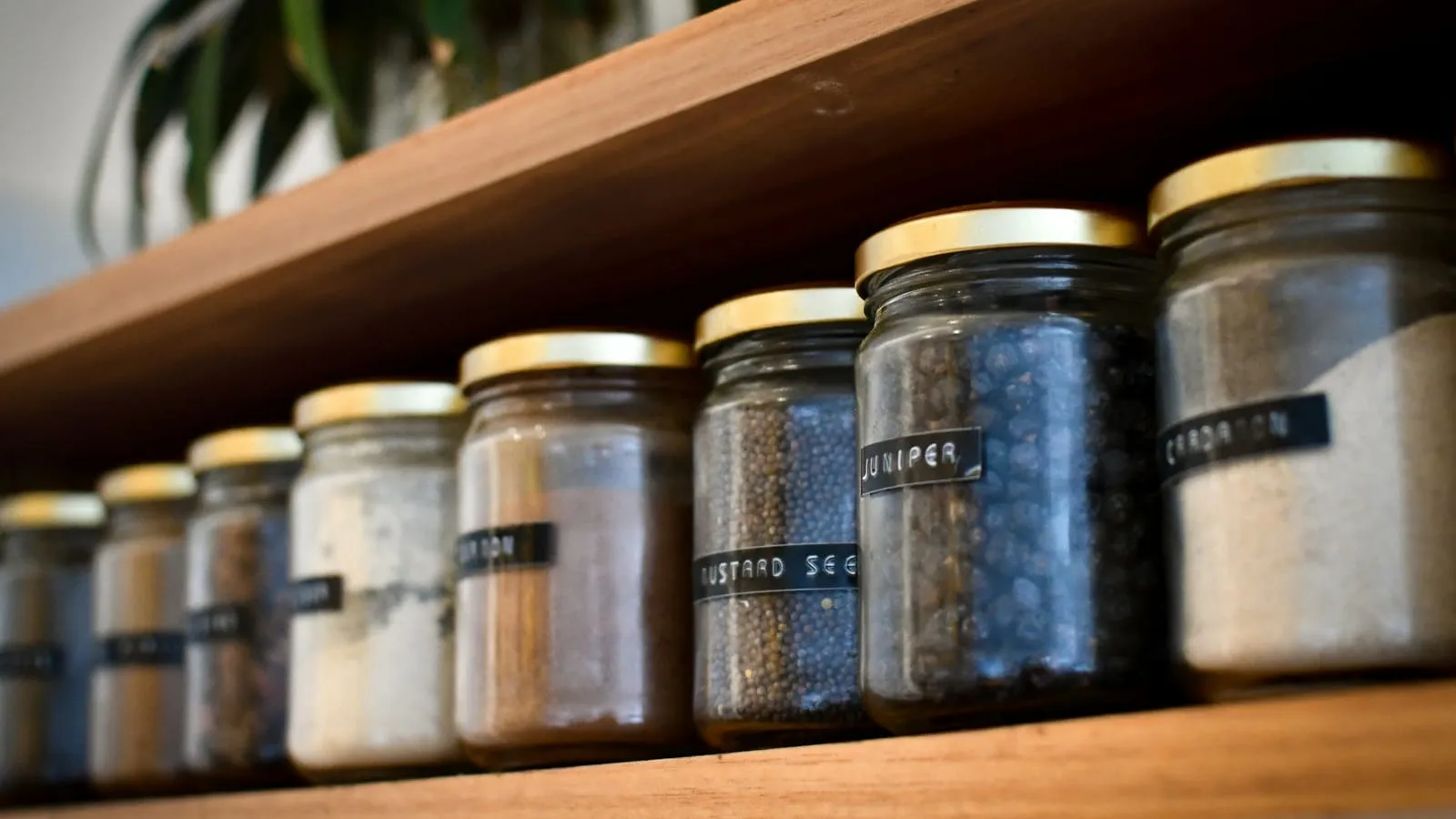
You get home, unpack, and open the spice cupboard to put the cumin away. There’s already a jar of cumin in there. Behind it, there’s another one, half full, bought during a curry phase you’d forgotten about.
Nobody sets out to own three jars of cumin. It happens because, standing in the supermarket aisle, a confident little voice says “we’re out of that,” and the voice is wrong.
Duplicate buying gets treated as a personal quirk, or as proof that someone in the house is “bad with food.” It’s neither. It’s the predictable result of asking memory to do a job it was never good at, in an environment built to make that job harder. Which is good news, because predictable problems have mechanical fixes.
What duplicates actually cost
The jar of cumin is cheap. The pattern isn’t.
Duplicates come in two kinds, and they cost you in different ways.
Perishable duplicates go straight to waste. Two bags of spinach, two packs of chicken thighs, two tubs of yoghurt. In most households, one of them gets eaten and the other gets pushed to the back of the fridge, where it turns. You paid full price for something that was never going to be eaten.
Shelf-stable duplicates are slower but not free. The extra pasta, tinned tomatoes and soy sauce don’t rot this week, but they tie up money, fill the cupboard, and hide the things behind them — which causes the next round of duplicates. And “shelf-stable” isn’t forever. Ground spices lose most of their flavour within a year or so. Flour and oils go rancid. Opened condiments have a fridge life measured in weeks or months, not years.
Some illustrative arithmetic: one duplicated perishable a week at around $4 is roughly $200 a year. Add a few dollars a week in shelf-stable doubles you didn’t need, and you’re past $350 before counting the food you threw away for other reasons. For most families that’s a meaningful slice of the $2,913 the average US household of four wastes on food each year.
Why your memory gets it wrong in the shop
You remember buying things, not finishing them
Buying is an event. You chose the item, carried it, paid for it, unpacked it. Finishing something isn’t an event at all. It’s the last spoonful scraped out of a jar on a Tuesday while you were thinking about something else.
So your mental inventory is lopsided. It’s full of vivid acquisitions and has almost no record of what got used up or when. Ask yourself “do we have soy sauce?” and you’re consulting a memory that’s months out of date.
The shop is a machine for triggering “I need that”
Supermarkets are designed around recognition. You walk down an aisle, see an item you buy regularly, and the familiar packaging produces a small feeling of need. That feeling arrives without any check against what’s actually in your kitchen. It feels like remembering. It’s really just recognising.
That’s why duplicates cluster around things you buy often but use slowly: spices, condiments, stock cubes, tinned tomatoes, pasta, rice. They’re familiar enough to trigger the reflex and slow-moving enough that you’ve lost track of the last purchase.
Running out feels worse than buying twice
When you’re unsure, buying is the rational choice — given how the two mistakes feel. Running out of something means a ruined dinner tonight, which you’ll notice and remember. Buying a duplicate means a cost spread across weeks and months that you’ll never connect back to this moment.
Under uncertainty, almost everyone buys. So the fix isn’t more willpower in the aisle. It’s removing the uncertainty before you get there.
Food lives in more places than you think
Fridge, freezer, the main cupboard, the cupboard above the cooker, the box on top of the fridge, maybe a shelf in the garage. Every extra location is another place where food goes out of sight. And out of sight, for food, means out of the inventory in your head.
Several shoppers mean several memories
In a household where more than one person shops, each person has their own partial picture and nobody has the whole one. If that’s you, the shared kitchen guide covers the coordination side in detail. The fix below still applies — it just has to be shared.
Find your repeat offenders first
Before fixing anything, spend fifteen minutes finding out what you actually duplicate. It’s almost never random.
- Empty one cupboard onto the counter. Pick the one with spices, tins and dry goods — that’s where duplicates gather.
- Group identical items together. Same product, same size, side by side.
- Count anything with two or more. Write the item down.
- Check the dates on the extras. Note anything that’s already past best before or will be soon.
Most people find five to ten items appearing twice or more, and the list tends to be very consistent from one household to the next: ground spices, stock cubes, soy sauce, tinned tomatoes, pasta, rice, baking powder, vinegar, and whatever condiment the family goes through in phases.
This list is valuable. It’s your personal “check before buying” list, and those are the items the routine below needs to cover.
As for the duplicates you’ve just found, don’t throw them out — that’s waste on top of waste. Move the opened one to the front and use it first. Plan a couple of meals around the tins you’re overstocked on. Unopened, in-date shelf-stable items you’ll never get through can go to a food bank.
Korgo is free to start. Pantry inventory, barcode scanning, expiry reminders and shopping lists are all in the free version — enough to stop buying things you already have. Download Korgo for iPhone →
The five-minute fix: look before you list
The single habit that ends most duplicate buying is doing the shopping list after checking the kitchen, not before.
That sounds obvious. Almost nobody does it. The usual sequence is: think of things you need, write them down, maybe glance in the fridge, go. The list is built from memory, and memory is the problem.
Here’s the routine. It takes about five minutes, and the best time is right before you write the list.
Minutes 1–2: open everything and look. Fridge shelves and drawers. The top layer of the freezer. Every cupboard where food lives. You’re not organising, you’re scanning. Pay attention to the back of each shelf, which is where the forgotten second jar lives.
Minute 3: check your repeat offenders. Go through your list from the audit above. For each item, actually look: is there one, and is it open?
Minute 4: write the list. Only things that are genuinely low or gone. If something is “probably fine,” it doesn’t go on the list.
Minute 5: take two photos. One of the open fridge, one of the main cupboard. These are your backup for the moment in the aisle when doubt hits.
That’s the whole routine. It works because it moves the question “do we have this?” from the aisle, where you have to guess, to the kitchen, where you can look.
Three rules that make it stick
Rule 1: One open at a time
Never open a second jar, bottle or packet of something until the first is finished. Keep any backups together in one “overflow” spot — a single shelf or box — so you can see at a glance how many you have.
This sounds fussy. It removes the most common source of hidden duplicates: two half-used jars of the same thing in two different cupboards, each convincing you that you’re nearly out.
Rule 2: Set a “par level” for staples
For the ten or fifteen things your household always uses, decide how many you want in stock. Pasta: two packets. Tinned tomatoes: four. Rice: one bag open, one spare.
Then you only ever buy to bring a staple back up to its par level. You stop thinking “we could use some pasta” and start thinking “we have one, the par is two, buy one.” It turns a judgement call into a count.
Rule 3: When in doubt about a staple, don’t buy it
This is the inversion of the instinct described above, and it’s the hardest rule to follow the first few times.
If you genuinely can’t remember whether you have a shelf-stable staple, assume you do. The worst case is that one meal this week needs a small change, or you pick it up on the next shop. The worst case of the opposite is another jar of cumin, and that’s what you’ve been doing for years.
The exception is a perishable you need for a specific meal in the next day or two. Buy that.
Where the paper version breaks down
The routine above works. It’s also how most people’s system quietly falls apart within a month, for a few reasons:
- The check is only as current as the last time you did it. A mid-week top-up shop, a partner’s trip to the shop on the way home, an online order — any of these and the picture in your head is out of date again.
- Photos show the front row. The thing you’re unsure about is usually behind something.
- The list lives on the fridge. You’re in the aisle; it’s at home.
- Nobody updates it when they use the last of something. Which is precisely the moment that matters.
What you actually need is an inventory that changes when food comes in and when it runs out, and that’s in your pocket in the shop. That’s a job for your phone, not your memory.
Doing it with Korgo
Korgo’s pantry tracker is built around exactly this: a live list of what’s in your kitchen that you can check from the aisle. Here’s how to set it up without a big project.
- Start with your next shop, not your whole kitchen. As you unpack, scan each barcode. Korgo fills in the name and nutrition; you set the expiry date. For loose produce or anything without a barcode, search by name.
- Add your repeat offenders by hand. Those five to ten items from your cupboard audit — add them once, today. They’re the ones most likely to trip you up.
- Let the rest fill in over a couple of weeks. Most kitchens turn over in about a fortnight. You don’t need to enter the back of the cupboard on day one.
- Open the app before you reach for the shelf. In the aisle, the question “do we have cumin?” becomes a two-second lookup.
- Keep the shopping list in the same place. When something runs out, it goes on the list there and then — not when you remember later.
- Share it if you shop with someone. On the Family plan, everyone in the household sees the same pantry and the same list, so a partner’s shop counts too.
Expiring items stand out on their own, so the duplicates you already own get used before they turn.
The short version
You buy duplicates because you remember buying things but not finishing them, the shop triggers recognition that feels like need, and under uncertainty buying always feels safer.
Fix it by moving the question out of the aisle: find your repeat offenders once, check the kitchen before you write the list, keep one open at a time, set par levels for staples, and when in doubt about a staple, don’t buy it.
Then put the inventory somewhere you’ll actually have it — your phone — so the routine still works on the weeks you skip it.